

Miniature Painting

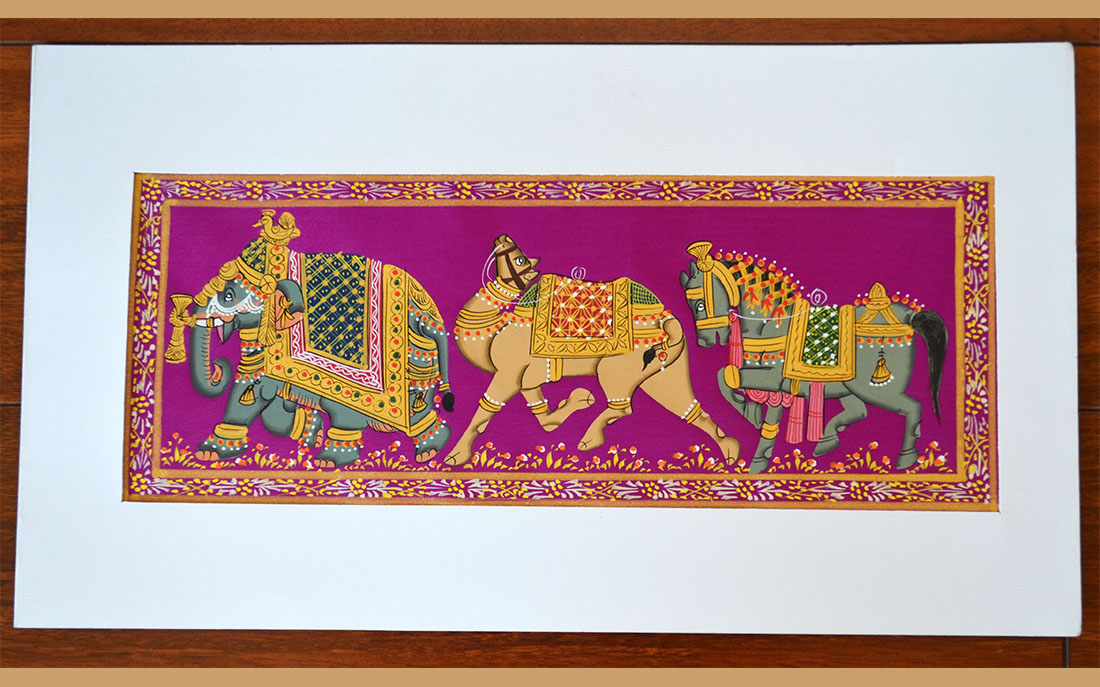
A work of fine art in miniature is a particularly personal object that draws the viewer into an intimate, concentrated little world that is breathtaking in its execution. Every single detail is miniaturized, the scale of the subject matter, the brush strokes; so that only with high magnification can one behold the immaculate details of the artist's technique.
The term miniature relates first of all to technique and as an identification and only secondly to the size of a painting. The viewer must view the work at close range to obtain a full appreciation of both the image and the technique. This technique is a specialized means of producing a perfect balance of color and detail in a series of thinly applied layers of colors intended to reflect light, showing a high standard of design, and mastery of the chosen media and palette. There is a feeling of preciousness associated with the art form due in part to the fact that it can usually be held in the palm of your hand and displays finely detailed work in brilliant, gem-like colors.
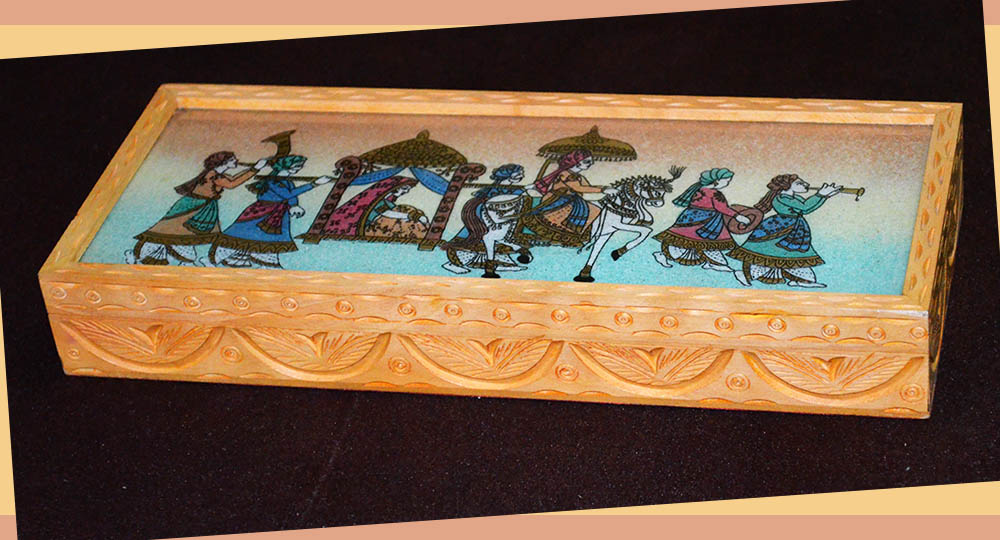
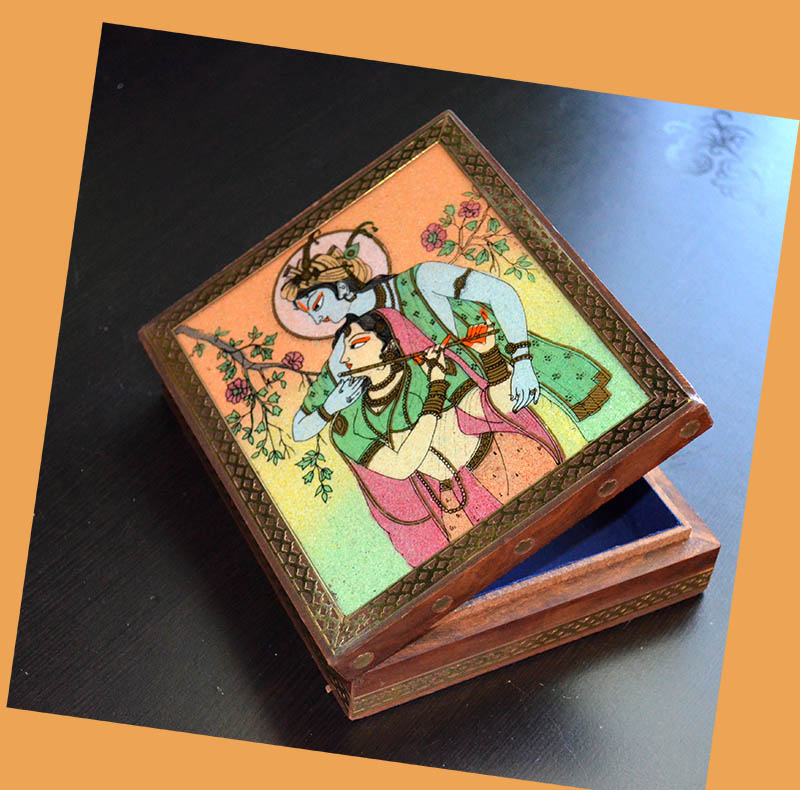
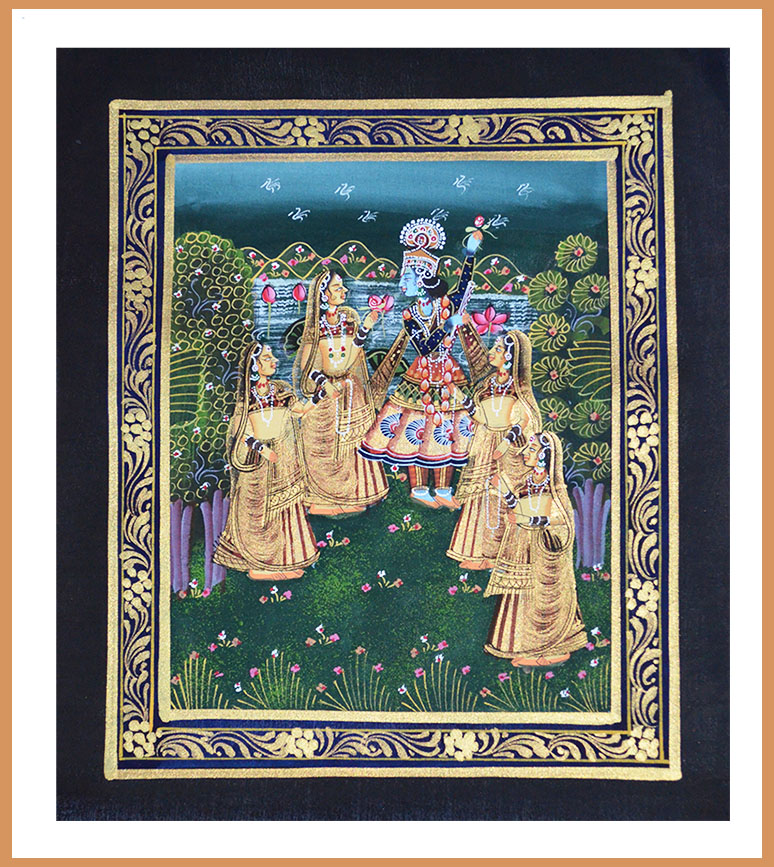
Paintings of Krishna-Lila, or the pastimes of Lord Krishna, are done in many different styles, often depending on what part of India they are found. They can be done on silk or cloth, canvas, on paper, thin pieces of marble, and they used to be done on thin slices of ivory before it was banned. Each of these mediums will provide the artists with a certain level of refinement for details.
Miniatures especially are often small paintings, but quite detailed. To get such details, the artist may even have to use a brush with a single bristle. The colors are often natural, made from various herbs or crushed and powdered precious or semi-precious stones.

The mood of the painting is usually determined by the elements included in the painting, which are often based on pastimes described in the Vedic scriptures, or on the inspiration and devotion of the artist. The point is to invoke the same mood of devotion or inspiration in the viewer who simply sees or meditates on the painting and the mood therein.
History of Rajasthani Miniature Painting
The art of Miniature painting was introduced to the land of India by the Mughals, who brought the much-reveled art form from Persia. In the sixteenth century, the Mughal ruler Humayun brought artists from Persia, who specialized in miniature painting. The succeeding Mughal Emperor, Akbar built an atelier for them to promote the rich art form. These artists, on their part, trained Indian artists who produced paintings in a new distinctive style, inspired by the royal and romantic lives of the Mughals. The particular miniature produced by Indian artists in their own style is known as Rajput or Rajasthani miniature. During this time, several schools of painting evolved, such as Mewar (Udaipur), Bundi, Kotah, Marwar (Jodhpur), Bikaner, Jaipur, and Kishangarh.
All the miniature paintings at Artsy Options are handpicked directly from the artist in Kishangarh area of Rajasthan where this magnificent work of art is still alive and mo
